Timber, utility and a warmth shaped by land + labour.
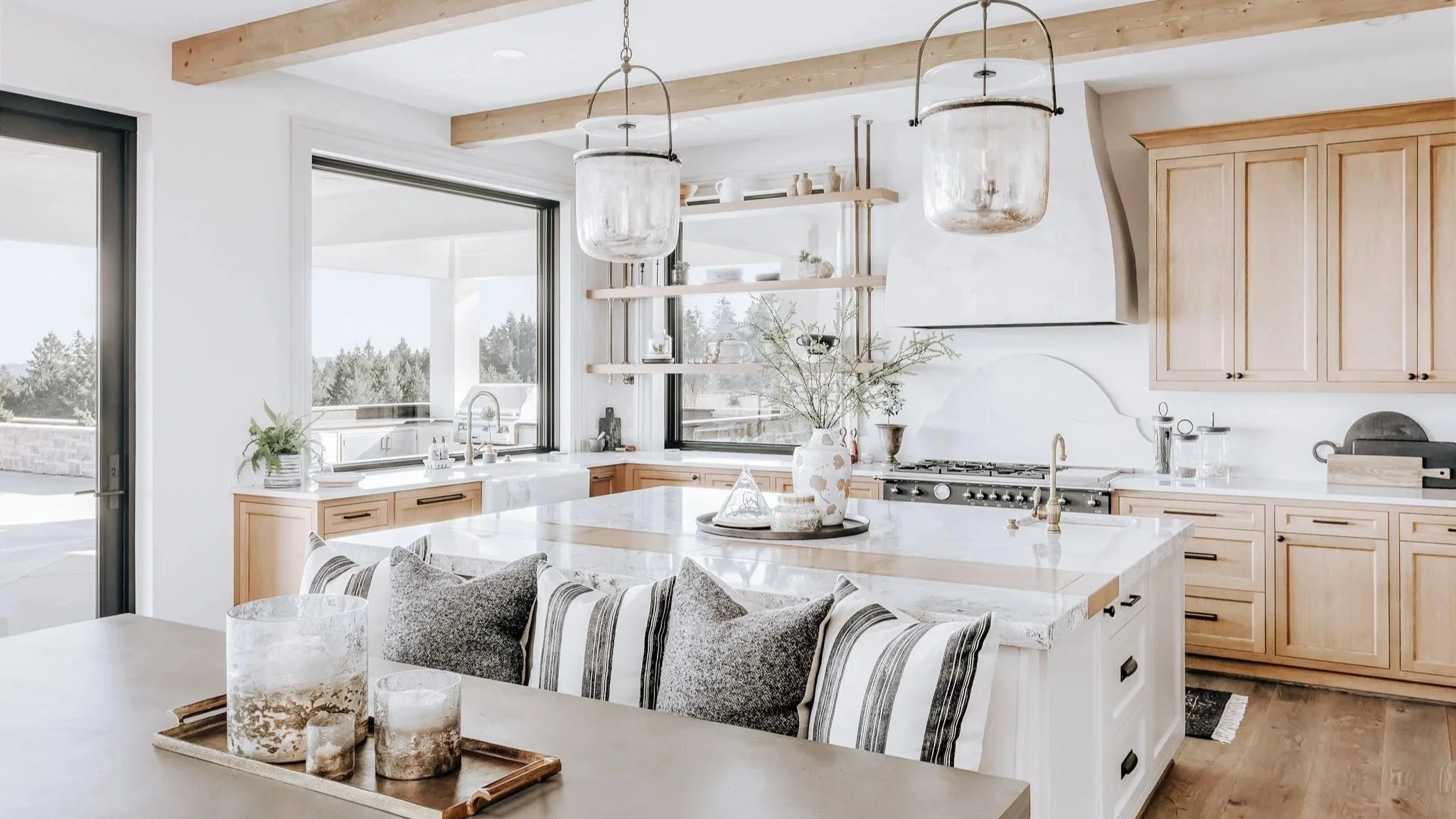
Farmhouse architecture is one of the most enduring silhouettes in American domestic design. Rooted in practicality and shaped by climate, labour, and land, the farmhouse evolved not as a stylistic statement but as a way of life. And yet — centuries later — its simplicity, warmth, and material honesty still shape how many people imagine “home.”
This guide explores where the farmhouse came from, how it adapted, and why it continues to influence contemporary living today.
Early American Origins (18th–19th century)
The first farmhouses were built by early American colonists using whatever materials were available: roughly hewn logs, stone blocks, and timber cut from nearby forests. Floor plans were modest — usually two rooms divided by a central chimney — and exteriors were plain, built for endurance rather than admiration.
As railroads expanded through the 19th century, access to milled lumber, quarried stone, and brick transformed rural construction. Homes grew larger, sturdier, and more refined. But life remained demanding: without electricity or indoor plumbing, daily routines revolved around firewood, wells, and weather.
If you're interested in how these early domestic traditions sit within the wider story of American homes, you may enjoy American Architecture — a broader chapter exploring how climate, craft, and migration shaped the country’s architectural identity.
Why Farmhouses Endured
Despite hardships, farmhouses represented stability: strong walls, a reliable hearth, and generous porches that blurred the line between work and rest.
By the 1930s, when electrification finally reached rural America, these homes became both practical and aspirational — places where families could work the land and still enjoy the comforts of modern life.
Defining Features of Traditional Farmhouse Architecture
While regional variations exist, classic American farmhouses tend to share:
A simple, rectangular floor plan
Two stories with narrow staircases
White or light-painted siding
A large, central kitchen with natural light
Wooden floorboards throughout
Dormer windows on the upper level
A deep porch (often wrap-around)
Thick walls and a substantial fireplace
A side-gable roof
Symmetrical window placement
This clarity of structure — functional, honest, unadorned — is what makes the style so timeless.
For another American domestic style shaped by British colonial influence and climate adaptation, you may appreciate Cape Cod Architecture — a related chapter exploring shingle, symmetry, and coastal restraint.
Modern Farmhouse (21st century)
Today’s farmhouse revival isn’t about recreating a rural lifestyle. Instead, it captures the emotional qualities people want in a home: warmth, space, informality, and a connection to nature.
Modern interpretations often include:
Material clarity
Wood + metal, white walls, stone fireplaces, and visible craftsmanship.
Indoor–outdoor flow
Large windows, French doors, and porches that serve as extended living rooms.
A refined rustic palette
Neutral interiors, natural textures, and intentional absence of clutter.
Contemporary updates
Clean lines, polished concrete, streamlined cabinetry, sculptural lighting.
The result is less “country life” and more “comfortable minimalism” — rural principles adapted for suburban or urban homes.
Examples from Across the Country:
Hudson Valley Barn
A 19th-century barn relocated to overlook the Catskills, serving as a guesthouse beside a modern farmhouse. The contrast of historic timber and contemporary living creates a compelling dialogue between past and present.
Floating Farmhouse
A restored 1850s manor home reimagined with glass walls, steel finishes, and concrete floors — iconic for its blend of heritage silhouette and modernist clarity.
Cast On
Set on a coastal hill, this home blends farmhouse cues (A-frame roofs, wrap-around porch, timber structure) with industrial touches that feel grounded yet architectural.
Where to Go Next
This chapter forms part of Series 3 — Architecture · A Beginner’s Guide. Explore the linked chapters above to see how farmhouse principles intersect with other American architectural traditions — from coastal cottages to mid-century clarity.