From Queen Anne ornamentation to Prairie-line modernism.
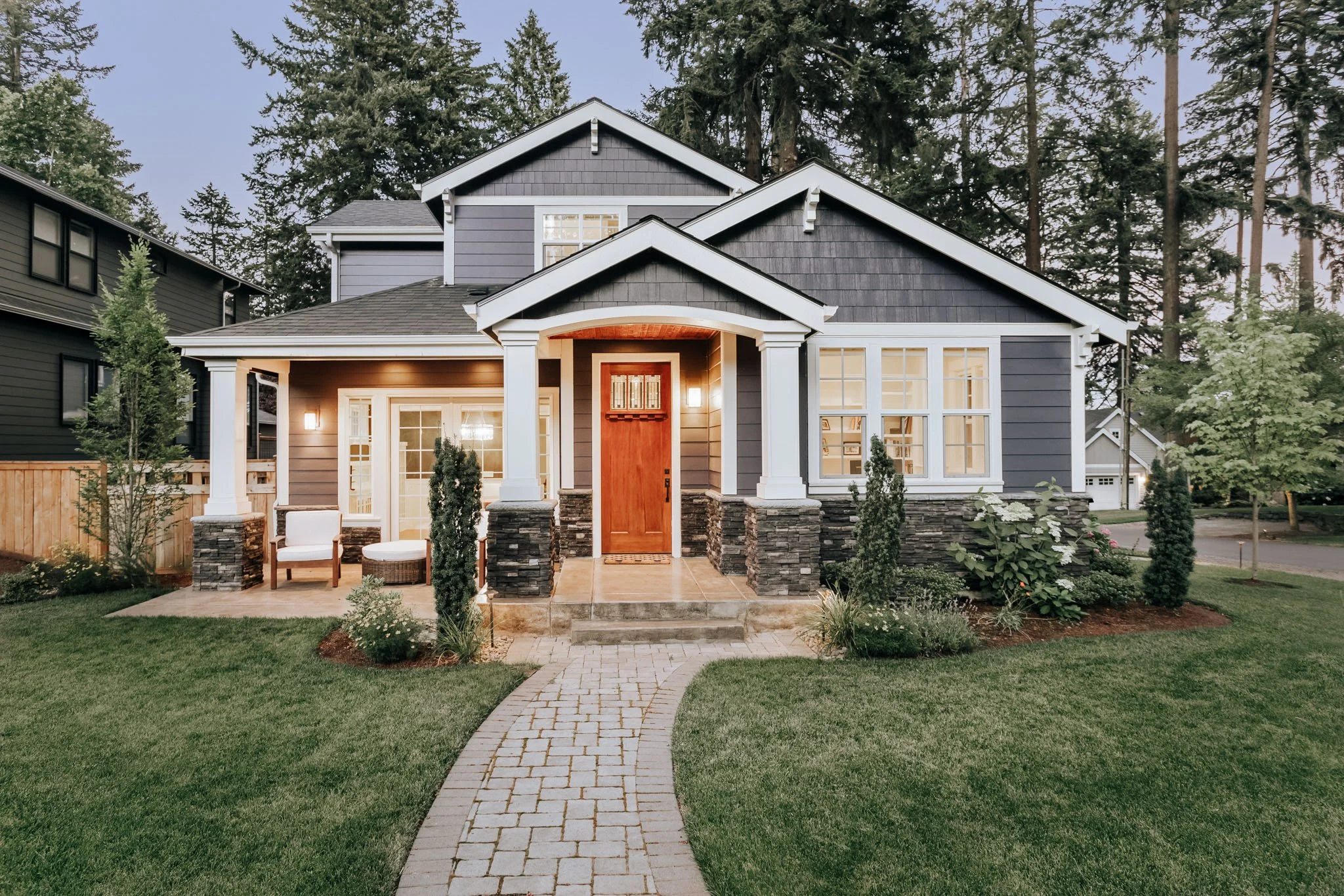
American architecture is a study in adaptation — shaped by migration, climate, craftsmanship, and the changing ideals of home. Every structure, from a simple shingled cottage to a sweeping Mid-Century pavilion, carries a lineage of ideas: some imported, some invented here, many reinterpreted through time.
Even brand-new homes borrow their silhouettes from the past. Most “new” styles are revivals — familiar forms reshaped for modern needs. Together, they tell the story of how Americans chose to live across eras of change.
Below, you’ll find the key styles that shaped American domestic architecture — each one rooted in a moment, a mindset, or a landscape. This guide acts as the index of the entire series, with deeper chapters linked where they exist.
In alphabetical order…
Cape Cod
Born from the earliest English settlers adapting their parlor houses to New England’s salt air and fierce winters, Cape Cod homes are simple, sturdy, and symmetrical. Steep roofs handle snow; shingles age softly in coastal light; proportions stay modest and human in scale.
Today, the Cape Cod silhouette still influences contemporary builds across the U.S., balancing tradition with quiet charm.
If you’re drawn to this coastal vernacular, you may appreciate Cape Cod Architecture — a related chapter shaped by weather, shingle, and restraint.
Colonial Revival
Following the U.S. centennial in 1876, nostalgia for the early American home surged. Colonial Revival blended the utility of the original Colonial house with decorative influences from Greek, Georgian, and Victorian design.
Symmetry, multi-pane windows, centered entryways, and gabled roofs define the style — one that has remained an American favourite for more than a century.
Contemporary (1960s–70s)
A departure from the predictable postwar house, Contemporary architecture experimented with structure and geometry: expressive forms, asymmetry, large panes of glass, and open-plan interiors.
Materials like metal and concrete signaled a shift toward design as a sculptural, exploratory discipline, reflecting a more experimental American spirit.
Craftsman Bungalow
Emerging from the Arts & Crafts movement, Craftsman bungalows prioritised natural materials, handcrafted details, and harmony with the surrounding landscape. Low roofs, timber beams, deep porches, and stonework made each home feel grounded and welcoming.
If you’re interested in how handcrafted traditions evolved in American homes, you may appreciate Farmhouse Architecture — a related chapter shaped by timber, utility, and land-rooted simplicity.
Mediterranean Revival
Inspired by Italian, Spanish, Andalusian, and French coastal architecture, Mediterranean Revival brought stucco walls, terracotta roofs, arched openings, courtyards, and garden-forward living to warmer U.S. climates — particularly Florida and California in the 1920s.
The result is a style defined by light, warmth, and indoor–outdoor flow.
Mid-Century Modern
From 1947–1957, American domestic architecture embraced simplicity, horizontality, and a new relationship with nature. Clean lines, sliding glass doors, flat planes, and sculptural furniture defined the era.
Spaces became open, intuitive, and minimal — a response to postwar optimism and modern living.
If you’re drawn to this era of clarity and indoor–outdoor ease, you may appreciate Mid-Century Modern Architecture — a related chapter that explores its defining principles.
Neoclassical
Grand, symmetrical, and inspired by ancient Greece and Rome, Neoclassical architecture shaped America’s early public buildings — and its most imposing homes. Columns, white stone, pediments, and disciplined geometry created an architecture of gravitas and order.
Its lineage traces directly back to Britain’s Georgian and Regency traditions.
If you’re curious about the European foundations behind this style, you may appreciate British Period Architecture — a related chapter exploring the historic forms that shaped Neoclassicism’s American expression.
Prairie Style
Developed by Frank Lloyd Wright and the Chicago School around 1900, Prairie Style was the first truly American architectural movement.
Long horizontal lines, overhanging roofs, grouped windows, and flowing interior spaces created a calm, grounded architecture that echoed the openness of the Midwest.
It rejected Victorian excess in favour of clarity, craft, and connection to landscape.
If you’re drawn to the philosophy behind this modern American shift, you may appreciate Mid-Century Modern Architecture — a related chapter continuing the evolution of openness, horizontality, and integrated living.
Queen Anne (Victorian Era)
Ornate, expressive, and unmistakably theatrical, Queen Anne homes emerged between 1880 and the early 1900s. Turrets, carved eaves, patterned shingles, stained glass, elaborate porches — everything leans toward decoration.
What began as a Renaissance-inspired movement in England became a colourful, lively part of America’s streetscapes.
If you enjoy exploring architectural heritage through detail and ornament, you may appreciate British Period Architecture — a related chapter tracing the roots of Victorian-era design.
Ranch
Inspired by Spanish Colonial traditions and popularised in the 20th century, Ranch homes are simple, single-story dwellings with low rooflines and open plans. Sliding glass doors, attached garages, and flexible living spaces made them ideal for postwar suburban life.
Their horizontality and indoor–outdoor focus place them in dialogue with the modernist homes that followed.
If you’re curious about how American living shifted in the mid-century, you may appreciate Mid-Century Modern Architecture — a related chapter shaped by similar ideals of flow, clarity, and informality.
Where to Go Next
This guide acts as the foreword to Series 3 — Architecture · A Beginner’s Guide.
Explore the deeper chapters linked above to understand how these styles evolved, and how they continue to influence the way we design, build, and live today.