Mid-Century Modern Architecture
Glass, horizontality + the rise of indoor–outdoor simplicity.
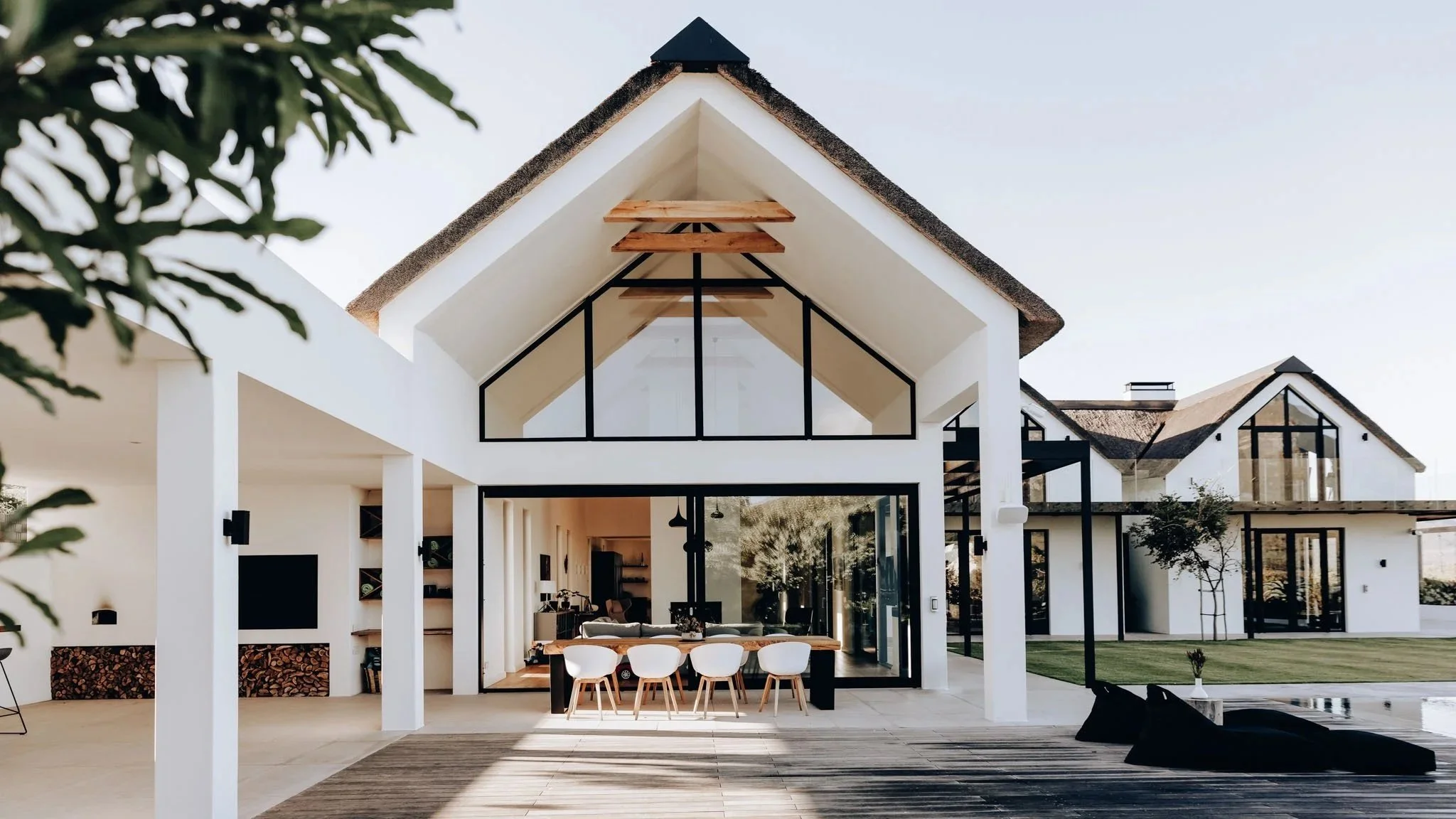
Mid-Century Modern has taken on a second life in the 21st century — resurfacing not just through Pinterest boards and desert photo diaries, but in the architectural language of homes across the world. What once defined post-war optimism now reads like its own design philosophy: clarity, calm, nature, light.
It’s a style built for everyday living — and for dreaming a little, too.
What defines Mid-Century Modern architecture?
At its core, Mid-Century Modern (MCM) is the meeting point of modernist ideals, new technologies, and a post-war desire for openness. Think:
Horizontal silhouettes.
Planes of glass.
Warm timber balancing cool concrete.
Indoor–outdoor thresholds softened into one continuous gesture.
If Modernism was rooted in theory, Mid-Century Modern brought that theory home — literally. It made good design accessible, functional, and beautifully livable.
When exactly is the mid-century?
Depending who you ask, “mid-century” spans anywhere from 1933 to 1965, but the decade that truly crystallised the movement sits between 1947 and 1957. This was the moment when new materials, European influence, suburban expansion, and American optimism collided.
A wave of European architects — many trained under the Bauhaus — brought with them a design language shaped by simplicity, clarity, and honest materials. The U.S. adopted it wholeheartedly. Suddenly, homes prioritised:
Open floor plans
Low, horizontal roofs
Floor-to-ceiling windows
Integrated outdoor space
Refined but unfussy craftsmanship
It was a future-facing architecture for a rapidly modernising world.
The classic features of Mid-Century Modern homes
Mid-Century Modern architecture is unmistakable once you know what to look for:
• Minimalism with warmth
Clean lines, monochrome palettes elevated with vivid accents, and an absence of ornamentation. Nothing is added without purpose.
• Indoor–outdoor living
Sliding glass walls, clerestory windows, and expansive glazing invite natural light and dissolve the boundary between garden and living space.
• Geometric confidence
Flat planes, asymmetrical forms, cantilevered roofs — a quiet sculptural quality that feels both effortless and intentional.
• Honest materials
Timber, stone, steel, and glass working together with restrained sophistication.
Where Mid-Century Modern architecture lives today
Although born in the U.S., the ripple effect of Mid-Century Modern design is global.
Palm Springs, California
No place captures the movement quite like the desert. Low silhouettes, pale concrete, breeze block screens, and mountain-framed horizontality create a cinematic backdrop that feels eternally modern.
Arapahoe Acres, Denver
America’s first post-war residential development to earn National Register status, showcasing architect Edward Hawkins’ MCM designs inspired by Frank Lloyd Wright.
Pacific Northwest
Here, Mid-Century Modern mutates into the Northwest Regional Style — wood-rich, glass-heavy, and anchored in the surrounding landscape. Atriums, vaulted ceilings, and timber frames are common signatures.
Scandinavia
It’s no coincidence that Scandinavian architecture and Mid-Century Modern share so much DNA: clarity, minimalism, and a human-scale design ethos. Mid-century homes across Denmark and Sweden are now enjoying a renaissance aligned with the movement’s global revival.
London suburbs
Surprisingly rich in MCM dwellings, often tucked among more traditional housing. The formula remains the same: low roofs, full-height glazing, and a quiet dialogue with nature.
Is Mid-Century Modern for you?
If you’re drawn to light, simplicity, honest materials, and a slower, more intentional way of living, Mid-Century Modern may be the architectural language that feels most at home to you.
It’s a style that asks very little — but gives so much back: clarity, calm, and a timeless relationship with the outdoors.
Where this chapter sits in the wider series
This guide is part of Series 3 — Architecture · A Beginner’s Guide. For styles that connect historically or conceptually to Mid-Century Modern:
Scandinavian Architecture — shared principles of minimalism, human-scale design, and natural light.
American Architecture — for the post-war cultural backdrop that shaped MCM’s rise.
Urban Modern Architecture — for a contemporary evolution of openness, adaptive layouts, and material honesty.