Light, timber, human-scale design — Sweden, Denmark, Norway.
The Scandinavian concept of hygge has shaped global lifestyle culture — but Scandinavian architecture is far more than cozy textiles and warm lighting. It is one of the world’s most admired architectural traditions: timeless, environmentally intelligent, and deeply connected to human well-being.
Below, we explore how Scandinavian design formed, what defines it today, and why its principles are shaping architecture worldwide.
A (very) brief history of Scandinavian architecture
Scandi architectural thinking stretches back to the Iron Age, but its recognisable form emerged much later.
For centuries, Scandinavian buildings looked similar to those in the rest of Western Europe. The real transformation began in the early 20th century, when architects began designing for climate, light, and human comfort — a shift driven by necessity in regions with only a few hours of winter daylight.
Technological advances and global design influences helped Scandinavian architects reinterpret traditional forms with a new, modern clarity. Out of this came a philosophy grounded in function, light, material honesty, and environmental respect — ideals that still guide Scandinavian design today.
Modern Scandinavian architecture as we know it
By the mid-20th century, Scandinavian design embraced Functionalism — minimalist, efficient, and socially driven. Yet Scandinavian architects added something unique: warmth, soft organic forms, and a deep relationship to nature.
Today, Scandinavian buildings continue to lead globally in environmental innovation, structural simplicity, and climate-conscious construction — principles echoed in contemporary designs such as the mirrored OOD Houses in Tuscany, where architecture and landscape exist in quiet dialogue.
The signature qualities of Scandinavian architecture
Natural light
When winter daylight lasts mere hours, every beam matters. Scandi architecture maximises daylight with oversized windows, glass roofs, translucent partitions, and interiors in pale woods and soft whites to reflect and amplify brightness.
Comfort
Harsh climates make indoor life essential. Warmth, texture, window seats, and thoughtful nooks support both well-being and function — the architectural expression of hygge.
Energy efficiency
Environmental performance is foundational. Scandinavian buildings use sustainable materials, smart insulation, and energy-efficient systems — solutions born from need but now central to global design.
Clean, simple lines
Minimalist yet expressive, Scandi spaces balance straight lines and gentle curves, drawing inspiration from organic forms, forests, and coastlines.
4 beautiful examples of Scandinavian architecture
Stockholm City Hall & Stockholm Public Library
Two icons of the early 20th century, expressing the emerging Swedish Grace style — functional yet elegant, with curved reading rooms and thoughtful material choices.

Strömkajen Ferry Terminal, Stockholm (2013)
A contemporary structure that incorporates a copper–zinc alloy called tombac, allowing it to blend naturally with the historic waterfront.

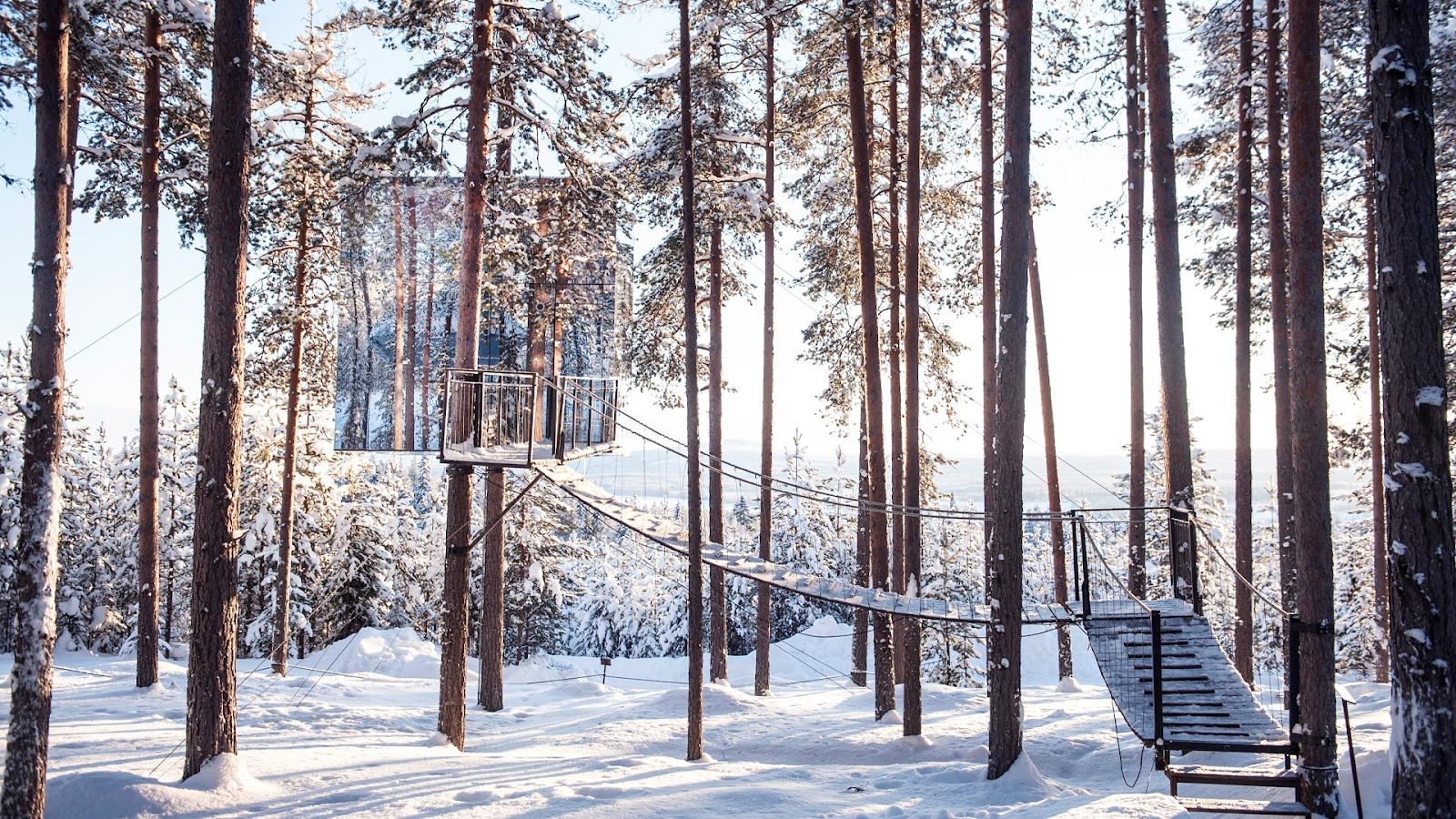
The Mirrored Cube, Sweden
Suspended among pine trees, this reflective cabin disappears into its environment — an eco-conscious design that echoes values seen in the mirrored OOD Houses.
Sydney Opera House, Australia
One of the world’s most recognisable buildings, designed by Danish architect Jørn Utzon. Its iconic “orange slice” forms are a testament to Scandinavian ingenuity on a global stage.

Scandi influence beyond Scandinavia
Clean lines, functional layouts, and environmentally sensitive design make Scandinavian principles adaptable worldwide. From coastal Italy to West Coast America, its influence shapes homes, public buildings, and sustainable developments.
Where to go next
This chapter is part of Series 3 — Architecture · A Beginner’s Guide.
You may also enjoy:
American Architecture — how diverse regional styles shaped the U.S. landscape
British Period Architecture — centuries of influence from Georgian to Arts & Crafts
Warehouse + Industrial Architecture — adaptive reuse, loft living, and the evolution of modern city spaces