Designing a Home That Feels Like You
Simplicity is powerful. Function is liberating. And personality — the quiet details that whisper who you are — is what turns a space into a life. The sweet spot is where all three meet.

Atmosphere
In cities that move fast — London in winter, Los Angeles in golden morning light — the homes that feel most grounded are the ones pared back to their essentials and then gently layered with meaning.
Clean lines. Calm surfaces. Intentional storage.
A ceramic bowl picked up in Sicily. A favourite armchair catching the afternoon sun.
A home that supports your flow and still holds your story.
Why Simplicity × Function Matter
Simple and functional interiors don’t just declutter your shelves — they declutter your mind.
Visual noise increases stress, decision fatigue, and the feeling of constantly being behind.
When rooms are designed to support what you do — your routines, your rituals, your creative work — they give you back clarity, time, and a sense of ease.
But too much minimalism can wash away your identity.
The art is in the balance: spacious enough to breathe, personal enough to feel lived in.
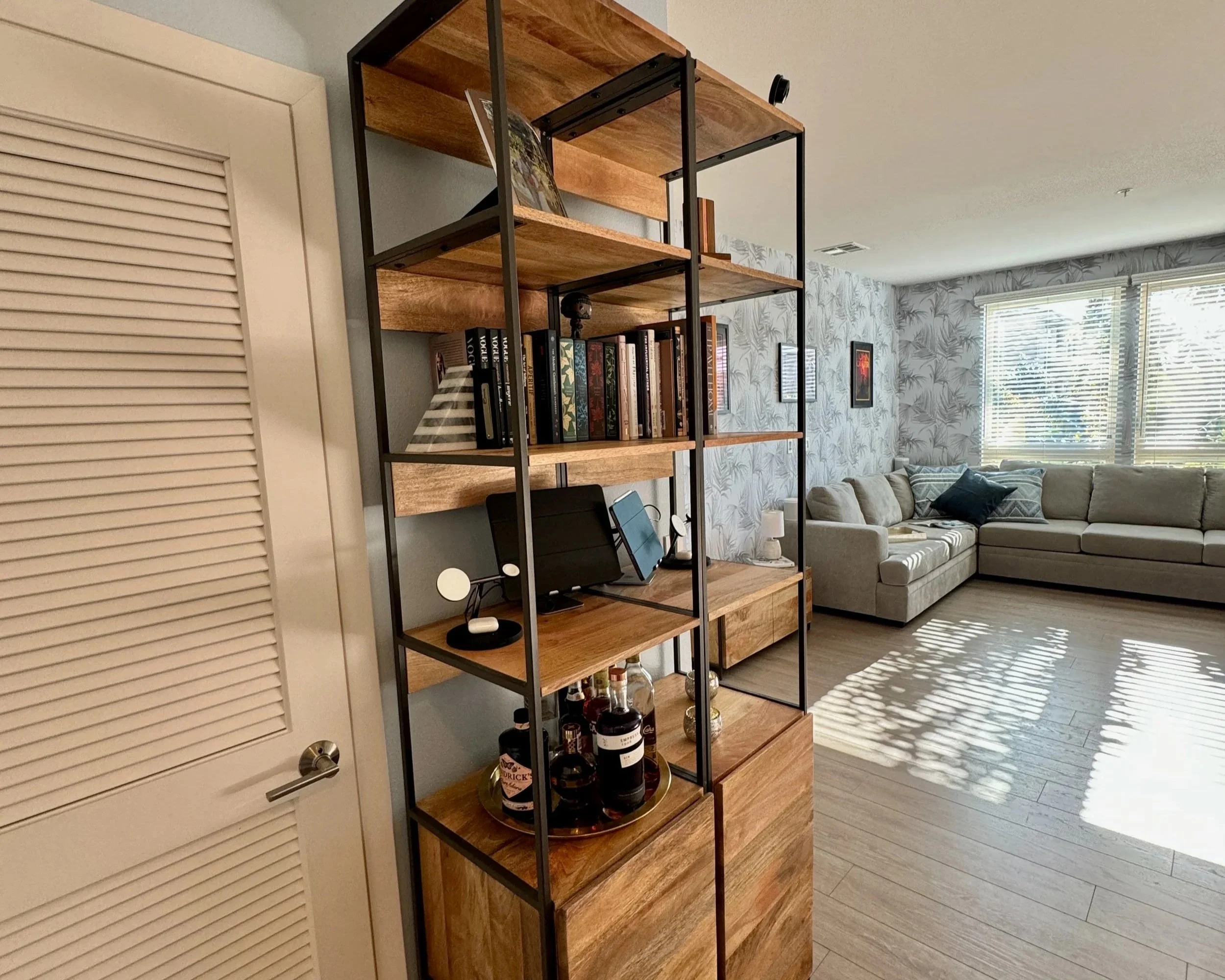
Design for What You Actually Do
Function begins with honesty.
Where do you caffeinate? Where do you read? Where do you drop your keys?
Anchor your layout around real habits.
Use storage that supports your rhythm — hidden drawers, slimline shelves, a calm corner where the day begins quietly.
These foundations echo Home Design Foundations— build from behaviour first, visual identity second.
Let Sentiment Live, But Curate It
Personal touches matter — deeply.
But they shine brightest when presented with intention.
Choose a handful of objects that feel like memory anchors: a film photo, a small sculpture, a postcard from a city that changed you. Group them in one clean vignette rather than scattering them across the room.
Whitespace lets sentiment breathe.
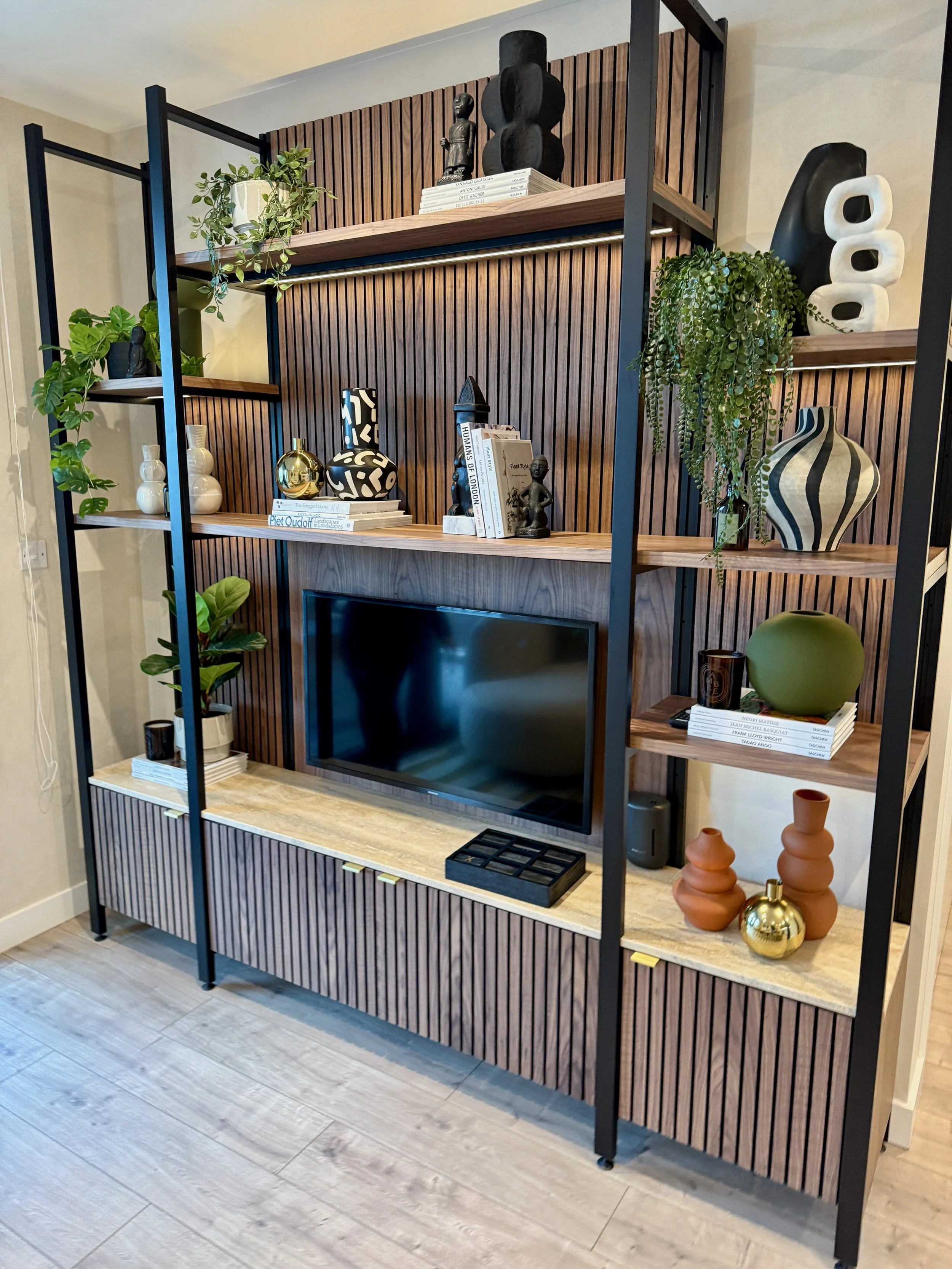
Use Colour With Restraint (and Emotion)
Minimal doesn’t mean monochrome. It means clarity.
Two elegant approaches:
Monochrome Saturation
One colour used deeply and consistently — a tonal world that feels calm and cinematic.
Singular Accent
A saturated armchair. A painted arch. A sculptural lamp marking a particular zone.
If you’re exploring bolder yet minimal touches, I recently shared a look at design details with a stronger, sculptural character
Texture Is Quiet Personality
Texture is where simplicity becomes warm.
Think linen, wool, matte ceramics, open-grain woods, brushed metal.
Texture softens architecture. It adds tactile depth without visual noise.
This is where personality shows up with the most elegance.
Curate Collectibles Like a Gallery
If everything is special, nothing is.
Select only the pieces you love — artwork, ceramics, vintage finds — and give them space.
A single large-scale artwork often brings more calm and character than a cluster of smaller frames.
If you’re drawn to meaningful objects with history, you’ll enjoy the edit on vintage and curated finds that add quiet character.
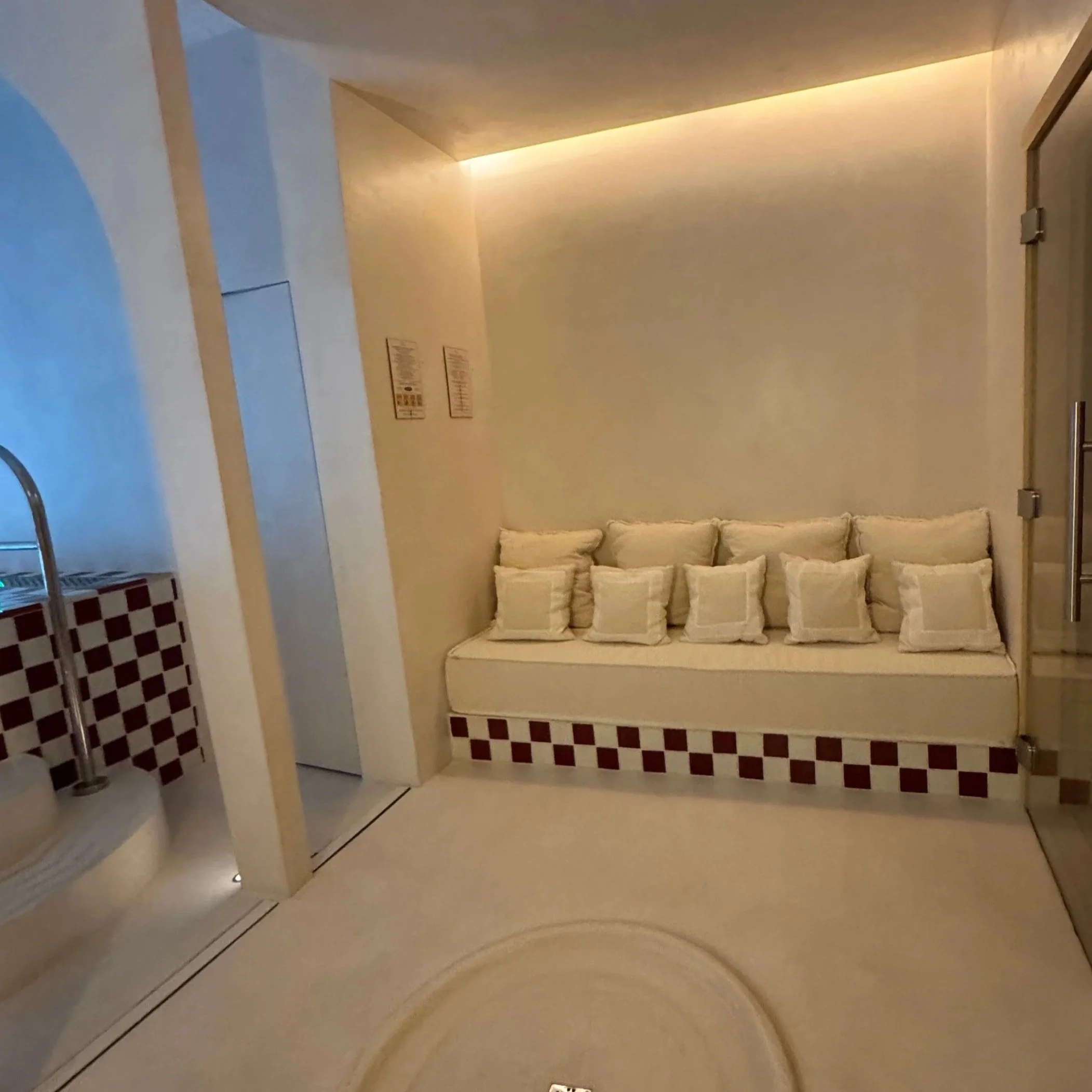
06 — Keep the Foundations Simple, Let the Details Speak
Neutral foundations. Clean lines. Hidden storage.
This creates the stage — your life adds the atmosphere.
A well-chosen throw. A stack of design books.
A plant in a textured pot. Small decisions that shift the entire mood — and like Creative Work Paths, they evolve over time as you do; lived-in, iterative, human.